Designing a Conversion-Focused Automotive Marketplace: Carify UX/UI Case Study

Traditional car leasing is rigid and opaque. Carify aimed to fix that. In this automotive product design story, we detail how we built a trustworthy vehicle marketplace UX design from the ground up. By replacing the intimidation of hidden fees with total transparency, we designed an engine that helped Carify rapidly expand its network of drivers and garage partners across Switzerland.

Product Design
Marketplace
Automotive
B2B
SaaS
UX/UI Design
Designing a Conversion-Focused Automotive Marketplace: Carify UX/UI Case Study

Carify is a Swiss startup modernizing a traditional industry. They recognized that consumers want the flexibility of a subscription — similar to Netflix — rather than the rigid, multi-year contracts of traditional leasing.

They set out to build the “Netflix for cars” — a platform connecting drivers seeking a vehicle subscription with local dealers looking to monetize their idle inventory. To make this ambitious B2B2C model work, they needed a completely fresh buying platform UX. They partnered with Fireart to design an ecosystem that handles the complexity of the automotive market while delivering a simple experience for both sides of the transaction.

Product
Carify
Website
carify.com
Industry
Automotive & Mobility, Marketplace
Region
Switzerland
Services
Brand Strategy, Brand Identity, Web App Design, Admin Panel Design
download

Problem: The high-stakes trust deficit

Buying or leasing a car in a traditional setting is rarely a pleasant experience. It involves a chaos of insurance, road taxes, winter tires, and maintenance. The sticker price is rarely the final price. Carify’s business model solved this with a single monthly fee. But their mobile marketplace UX UI had to convince users that it was actually that simple. In a high-ticket transaction, a second of confusion leads to drop-off.

Challenges

The trust deficit
People are naturally wary of buying cars online. If a marketplace looks disorganized, users assume the cars are, too. Building a vehicle marketplace UX design required establishing trust from the first interaction.

Two very different users

The driver wants an aspirational browsing experience. The dealer wants a fast, purely functional dashboard to manage inventory. Trying to force both into the same design is a recipe for failure.

The data overload
Cars come with specs — engine size, torque, trim levels. Hitting a browsing user with all this data upfront creates cognitive overload, making them close the tab.

Goals

Design for extreme clarity
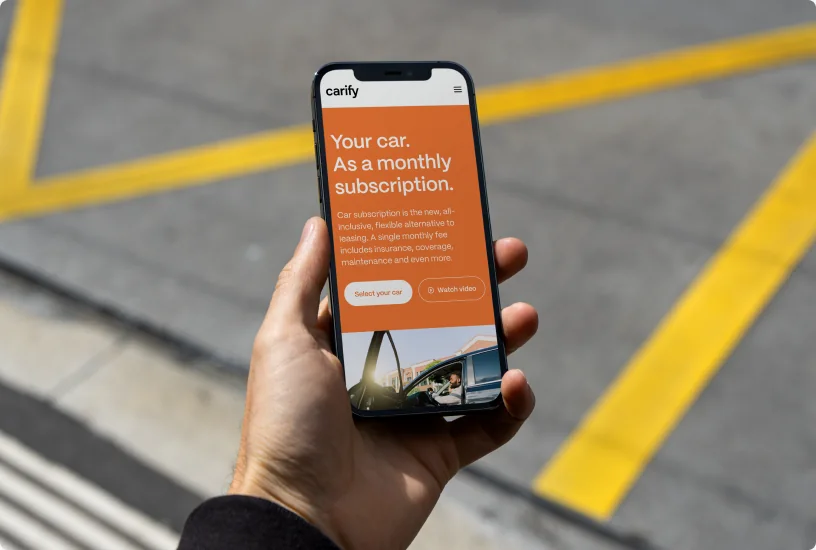
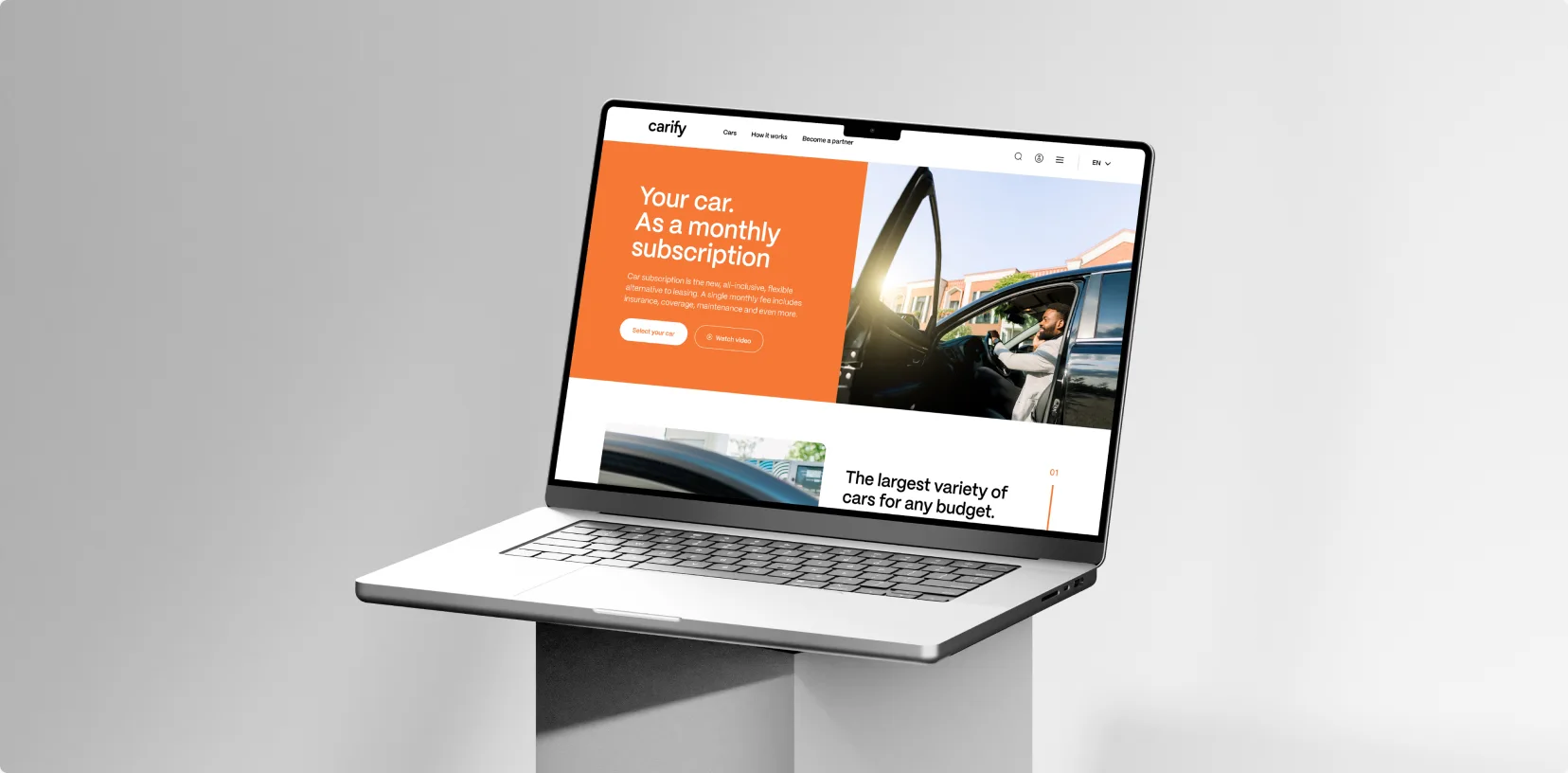
Create a car sales app UI UX where the value proposition (one price, everything included) is instantly visual in a reassuring interface.

Build a dual-sided ecosystem
Develop a system that delivers a car marketplace app design for consumers, while providing a utility dashboard for dealers.

Structure the discovery
Design a filtering and card system that prioritizes the information users care about (looks and monthly price), allowing them to scan inventory rapidly.

Our Approach

In a marketplace for expensive items, trust is your currency. Our concept for this automotive marketplace UX UI case study was what we call the "architecture of trust."

We aimed to eradicate the anxiety users feel about hidden fees or complicated contracts. Our strategy was to use progressive disclosure and absolute transparency throughout the car buying platform UX.
Our system would guide the user gently, proving at every single step that Carify has nothing to hide. By making the interface brutally honest and visually stable, we turned the design into the platform’s conversion tool.
carify-approach-figma

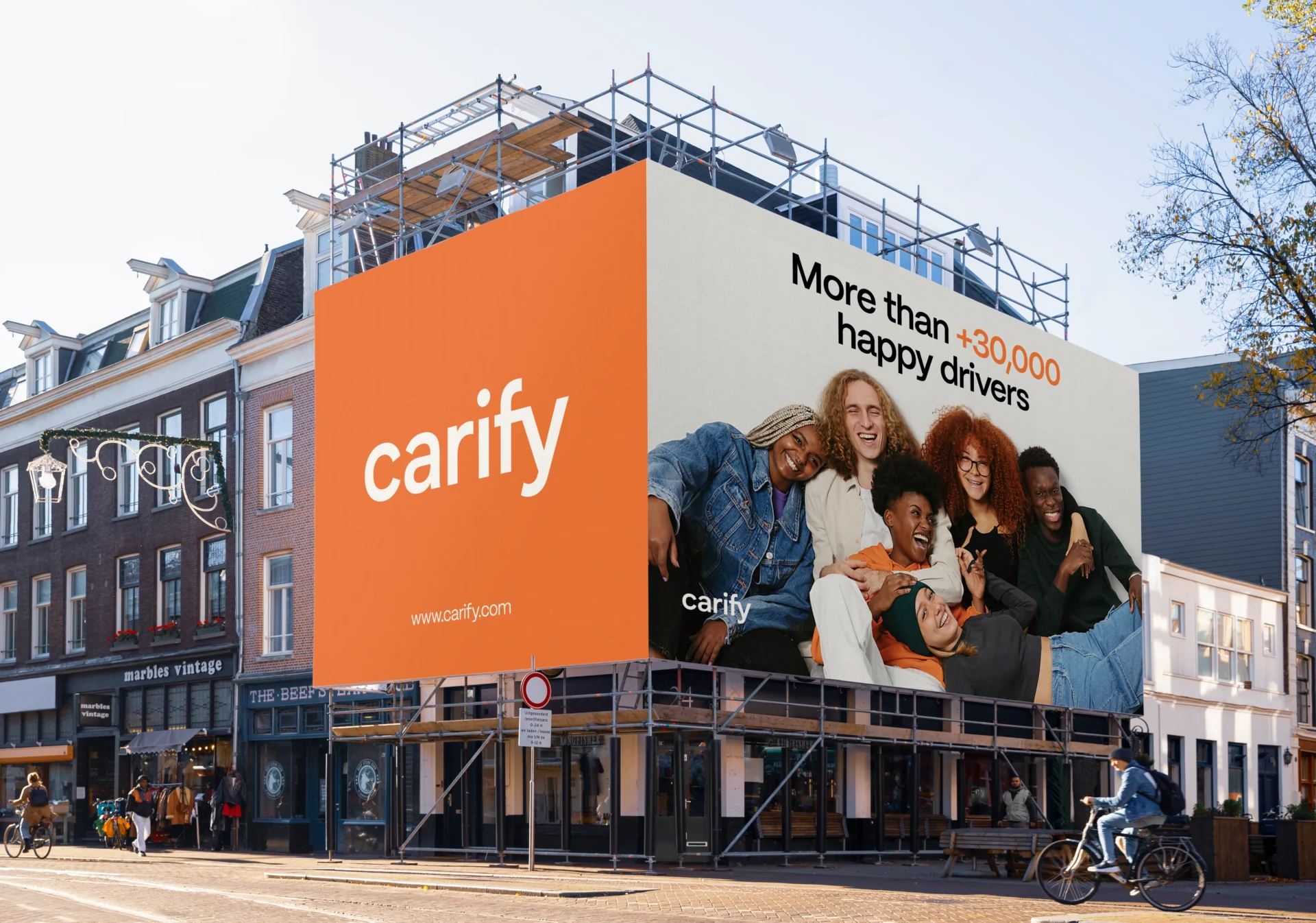
When you are asking people to pay monthly for a car, or asking established garages to give you their inventory, you cannot look like a beta project. The unified branding and the professional UI allowed Carify to punch above its weight class. It accelerated trust.

fraime

Building trust through UI/UX

To turn the concept of absolute transparency into a product, our team did extensive user research, analyzing booking behaviors on platforms like Airbnb. We mapped out user flows for both the drivers and the dealers, building dozens of interactive prototypes.

John K.

Product Manager

John is a 30-year-old model family man and he works as a sales manager in Zurich. Together with his family, he enjoys traveling around Switzerland in his spare time. Until then, he used to keep his car in his garage but realized that this was not profitable at all given all the maintenance costs.

A car subscription was therefore the best option for him. You can borrow the car for a long period. An easy and quick process for registering and picking up the car. Be able to spend less money on loss & accident cover or servicing during the use of the car.


carify-john-figma

Robert M.

BMW representative

Robert is a 48-year-old man and he has been running the BMW dealership in Zurich for many years. BMW’s sales have always been high, but with all the new makes and models on the car market, they have fallen slightly. So Robert started to think about solutions to help him deal with this situation.

The subscription model is precisely the perfect opportunity to increase the popularity of BMW cars across the country. Be able to sell more cars via the Try and Buy system. Receive additional revenue through compensation for providing the car.

carify-robert-figma

01 The “sandbox” booking approach

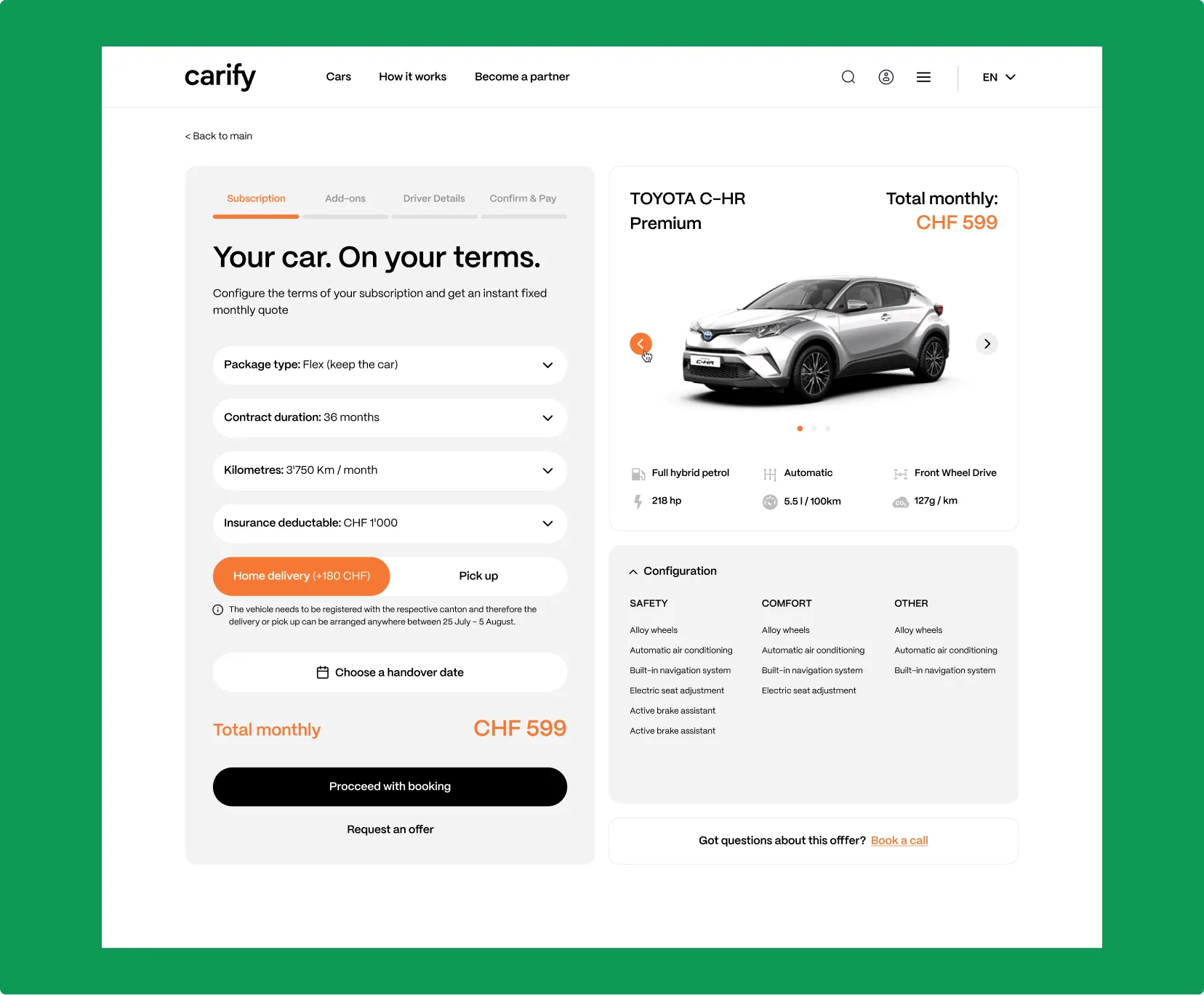
The most critical part of the car marketplace app design was the vehicle detail page. We knew users fear clicking “Book” because they expect hidden fees. To counter this, we designed a “sandbox” environment.
Before entering the booking flow, users can play with interactive sliders — adjusting contract length and mileage — and see the monthly price update instantly. This gave users complete control and eliminated anxiety about surprise costs.
carify-approach

02 Structuring the digital real estate

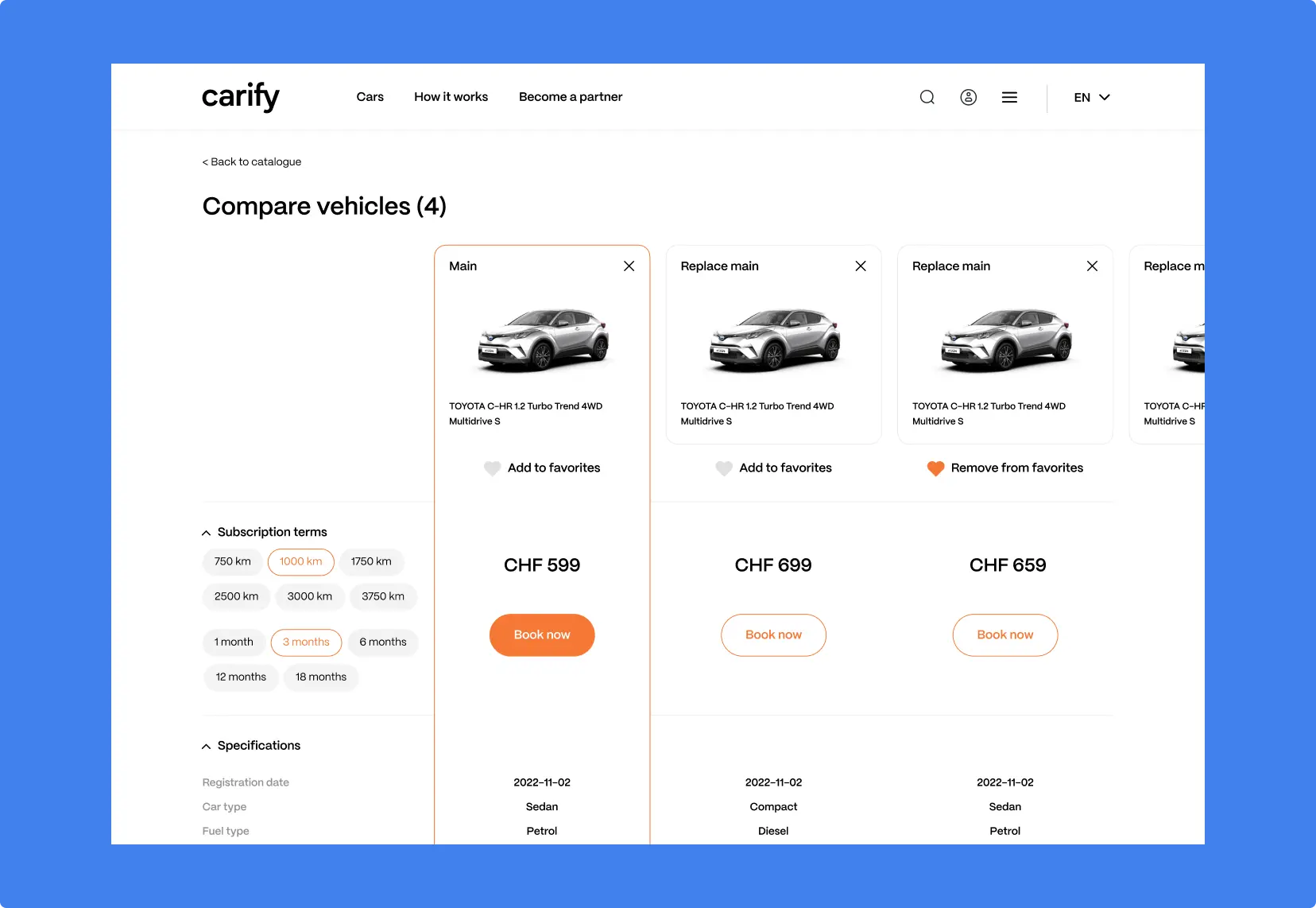
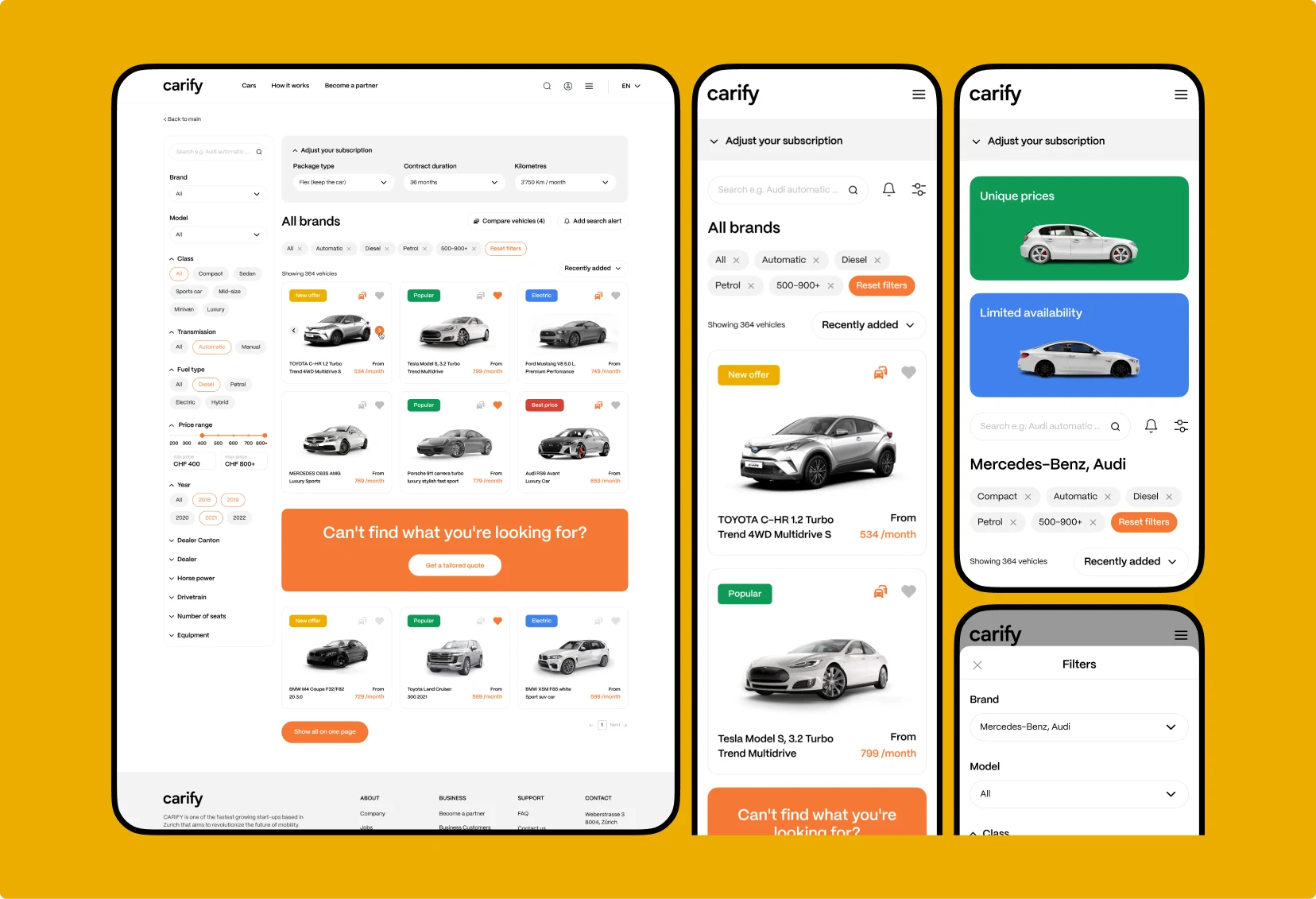
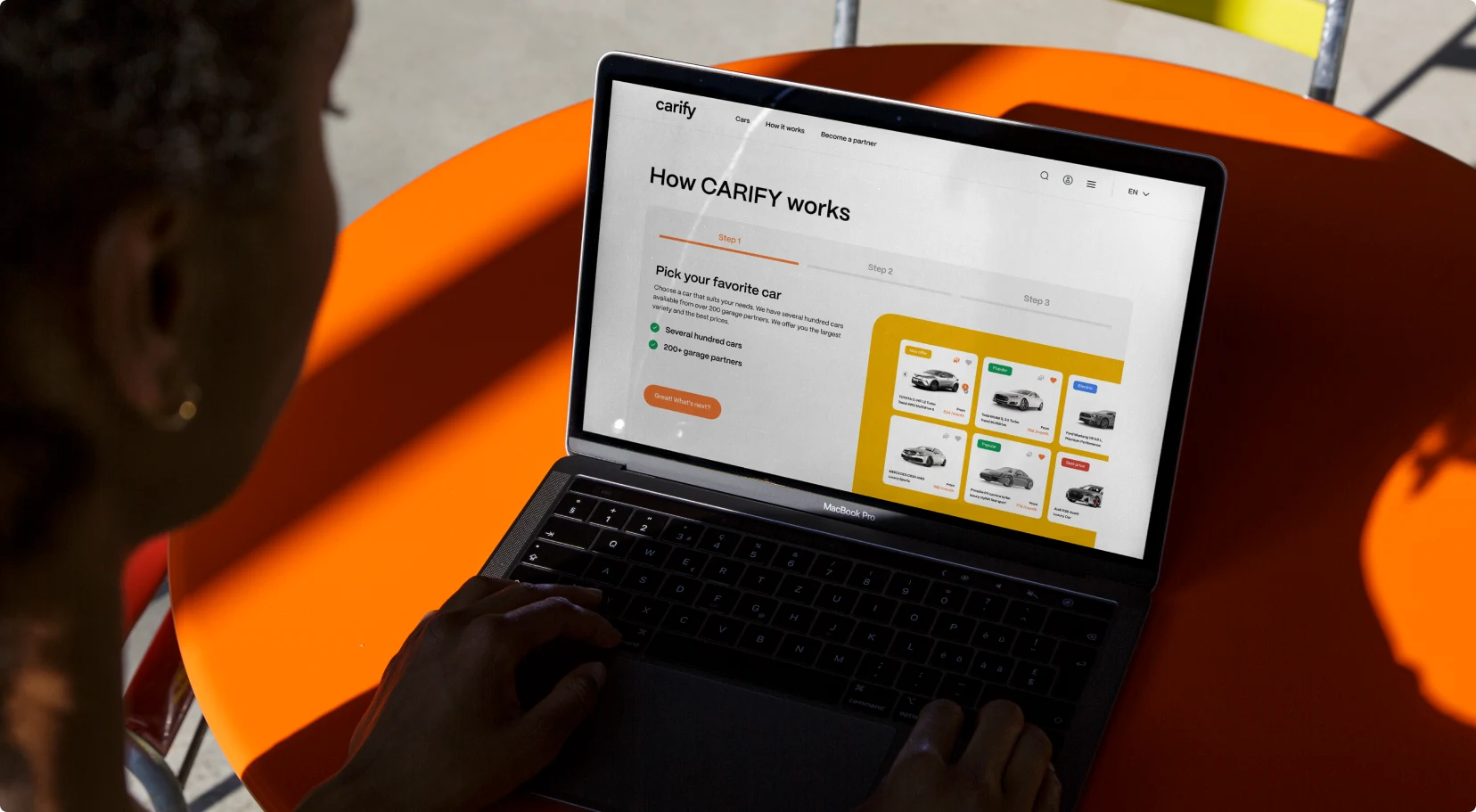
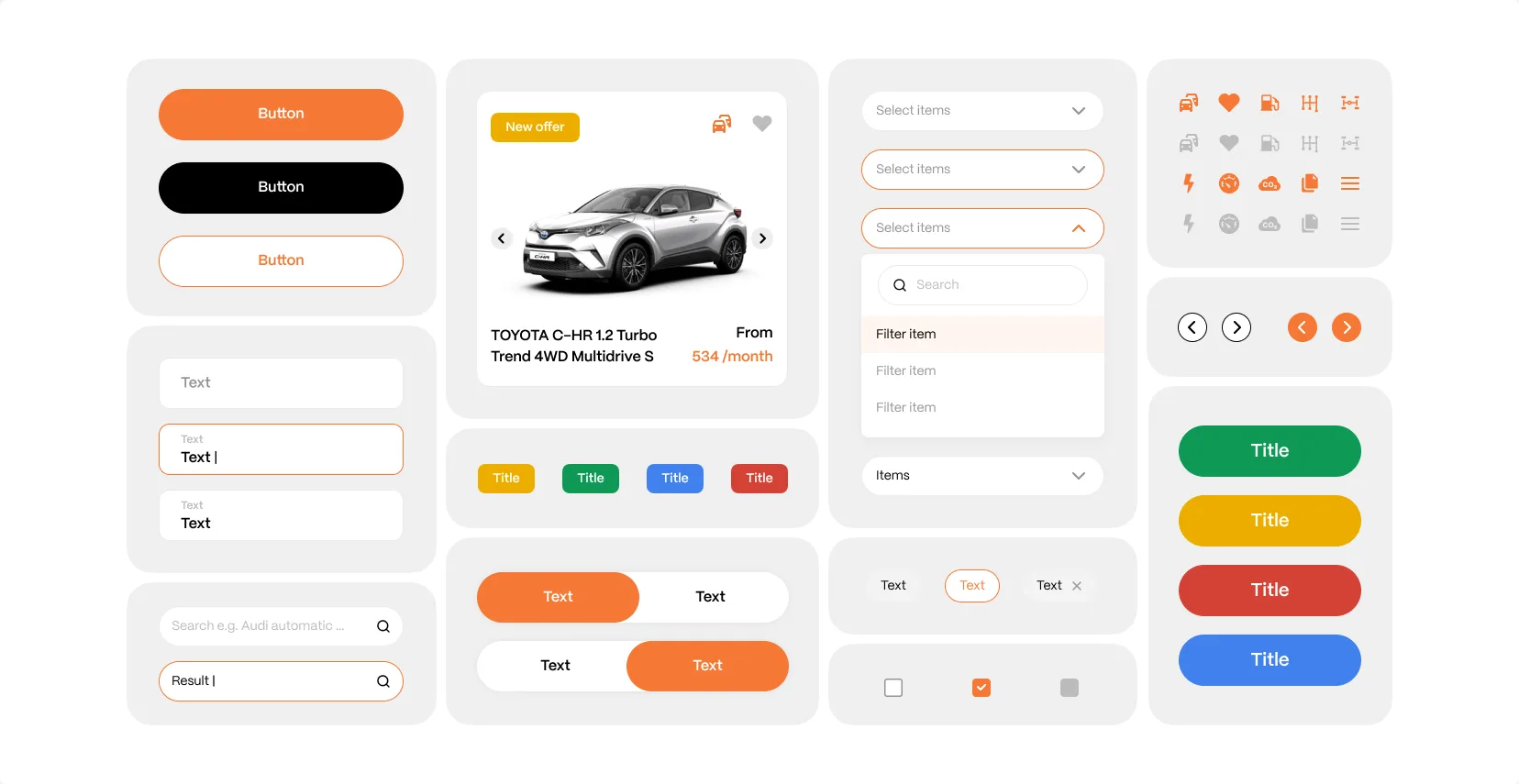
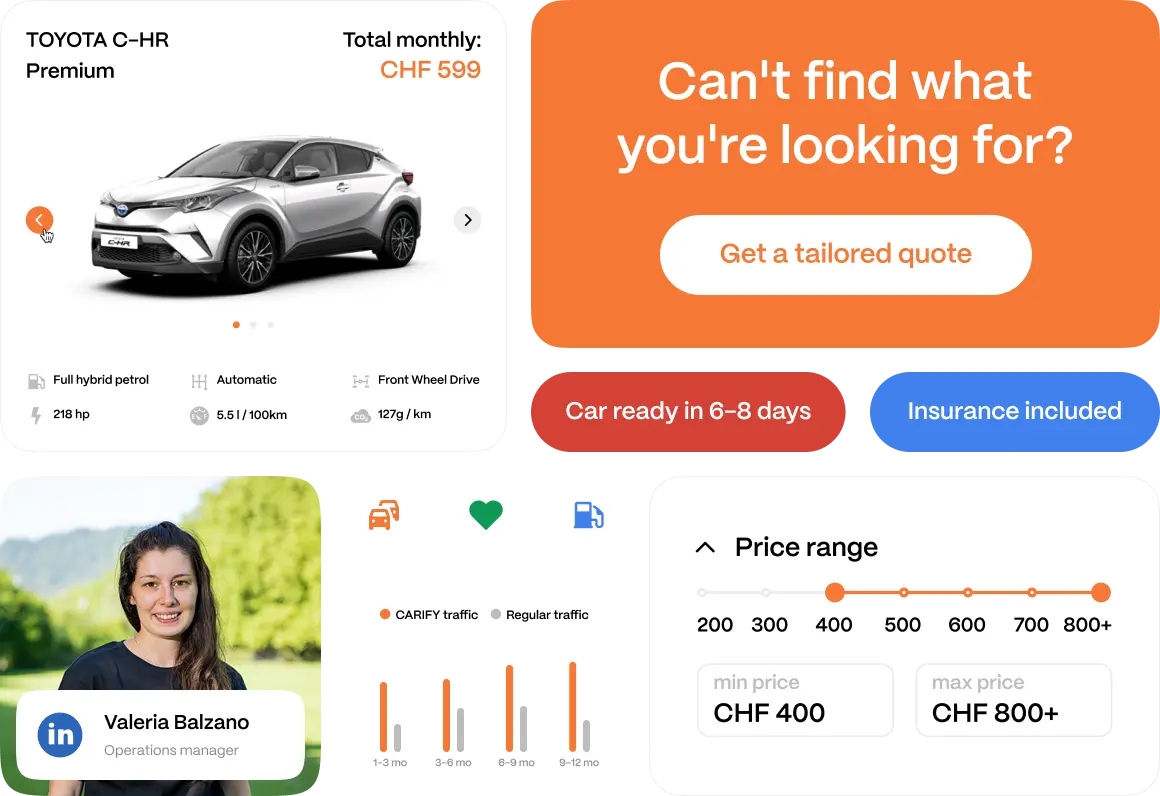
Automotive databases are full of complex specs, but showing them all at once is messy. We established a strict visual hierarchy in this mobile marketplace UX UI. We prioritized the photo (the emotional hook) and the monthly price (the decision factor), replacing text-heavy features like “Automatic Transmission” with simple icons. This allows users to scan inventory without getting overwhelmed.
Orders screen

03 A B2B engine built for speed

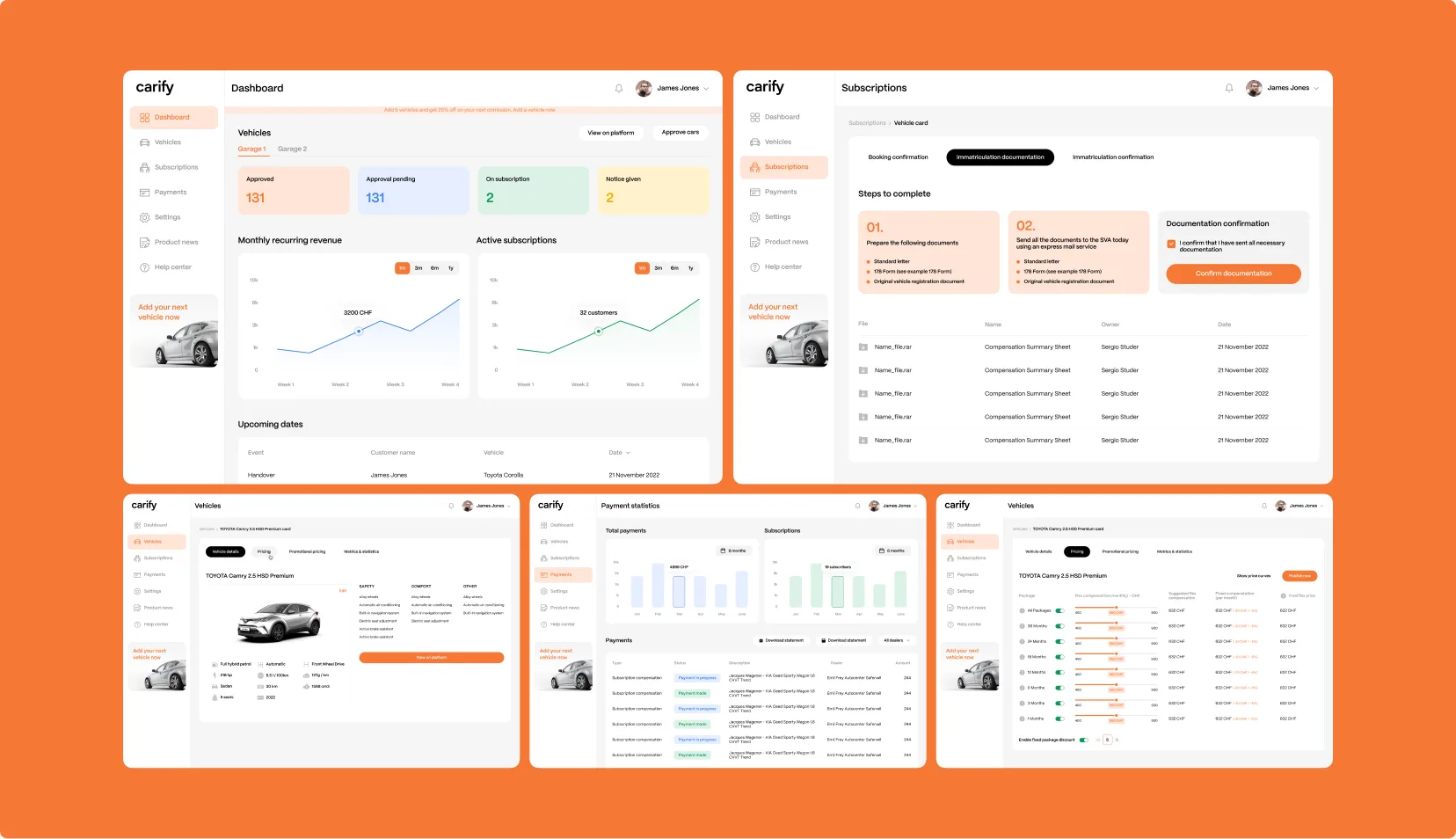
The platform had to work flawlessly for the dealers supplying the cars. While the consumer side of this vehicle marketplace UX design was emotional, the dealer dashboard needed to be a utility.
We removed the marketing elements and built a highly functional admin panel with a visual slider allowing dealers to instantly see their profit margins.
carify-orders

Pricing a car subscription is complicated math involving depreciation, insurance, and contract duration. We turned that into a simple visual interface. The dealer sets the base price with sliders, and the system instantly calculates their profit based on different subscription lengths. We made a complex financial calculation feel as easy as adjusting the volume on your stereo.

04 Designing for the marketplace reality

A marketplace is only as good as its content, and dealer photos can be poor quality. As part of our automotive product design strategy, we engineered the UI to be forgiving. We used CSS framing rules so weirdly cropped photos wouldn’t break the layout.
Branded, geometric fallback patterns turn on when images are missing. This ensured the platform always maintained a professional appearance, regardless of the input quality.
carify-04-marketplace
Ready to ramp up conversions on your marketplace?

Let’s talk.

carify-final-figma

Results: A platform built to scale

The automotive marketplace design case study for Carify proves that clarity is the fastest way to build a two-sided market. By removing the friction from the car-buying process, the product reached massive results.

Accelerated network growth

Clear monthly pricing and a confident digital experience helped Carify accelerate growth across its driver and garage network.

A frictionless dual-sided ecosystem

The platform connected drivers with trusted garage partners and gave both sides a simpler, frictionless way to move forward.

A blueprint for high-value marketplaces

The product established a repeatable model for high-value marketplaces where clarity and trust drive conversion.

Secured funding

The platform’s traction and scalable foundation helped Carify secure funding for continued growth.

carify-results-phone
Ready for Life-Changing Design?
Let's see how our team can fast-track your business goals.